Observational Seeing: Training the Eye for Everyday Creativity
What does it mean to observe?
Observation in visual practice is the disciplined act of noticing relationships: the intervals between forms, the flow of light across a surface, the rhythm of repeated elements. It is less about recognition and more about measuring and translating those relationships into marks.
Measure before you mark
One practical way to begin is with comparative measurement. Use a pencil held at arm’s length to compare angles and lengths. Translate those measures into your drawing by comparing them to a known unit on the page. This method slows you down and aligns hand and eye.
Notice negative space
Negative space is the shape between and around objects. Drawing these voids can clarify proportion and spacing more effectively than focusing only on outlines. Try drawing a simple still life by first sketching the negative shapes; you will often find the relationships become clearer.
Capture gesture and weight
Gesture drawing is not about detail; it is about capturing the essential movement and weight of a subject. Use quick, fluid strokes and prioritize direction and balance. A series of thirty-second gestures can reveal the underlying structure more reliably than a slow, detailed study.
Observe light in steps
Break light down into zones: highlight, midtone, core shadow, reflected light, and cast shadow. When you learn to identify these bands, you can render form with authority. Practice by painting or drawing a single sphere under natural light and translating those five zones simply and accurately.
Train with specific, short exercises
- One-line drawings: Draw a subject without lifting your pen. The exercise encourages continuous observation and reduces tentative starts.
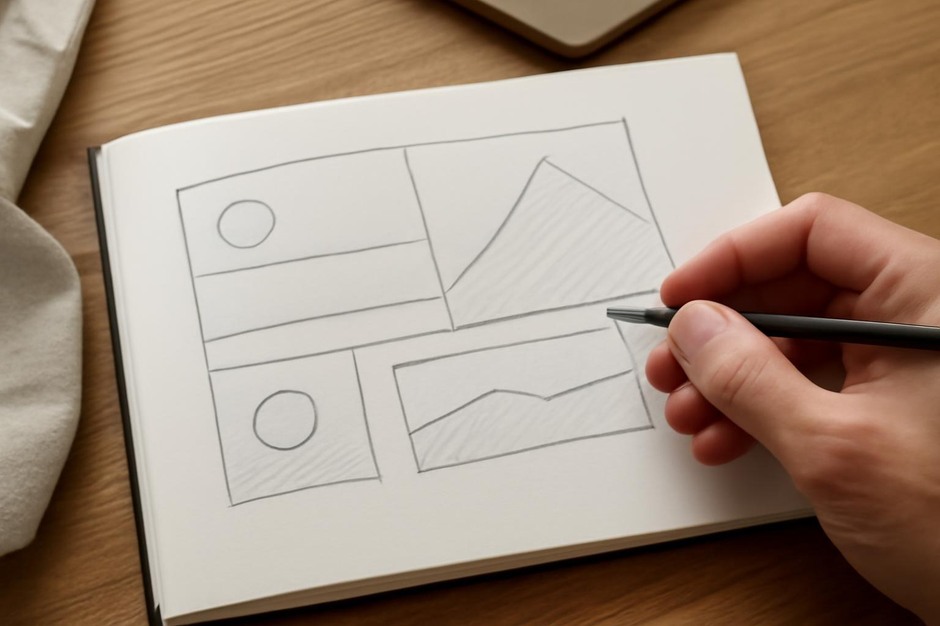
- Value thumbnails: Make several small tonal studies to find strong value structures quickly.
- Contour observation: Slowly trace the outline of a subject in blind contour drawing to sharpen hand-eye coordination.
Look for pattern and rhythm
Visual scenes are full of rhythms: rows of windows, repetition of leaves, or alternating textures. Recognizing these patterns helps in composing and simplifying. Rather than rendering every leaf, capture the rhythm and suggest the texture.
Make observation habitual
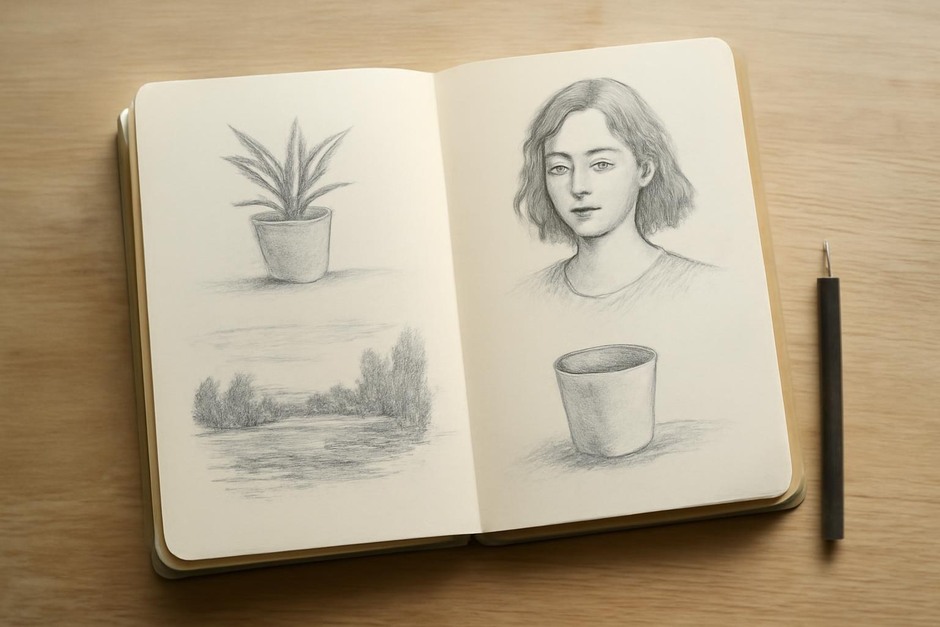
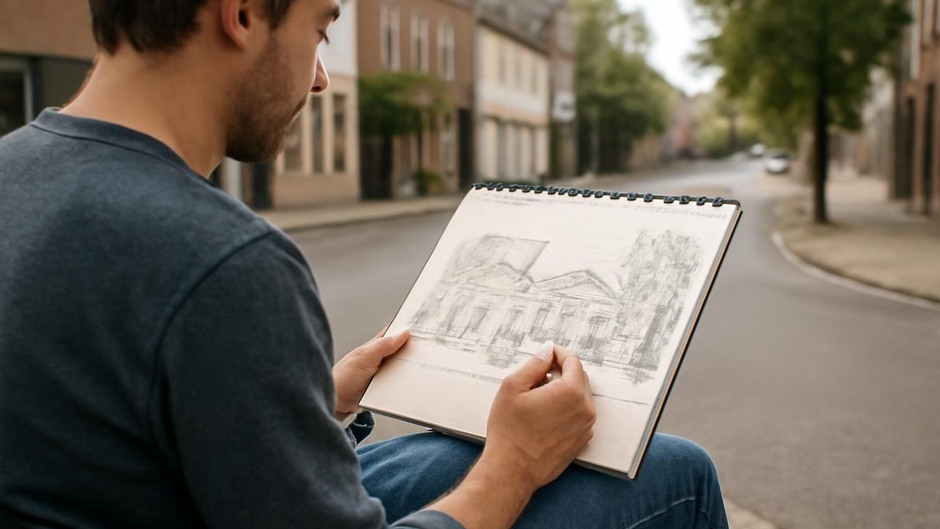
Carry a small notebook and draw brief studies in spare moments. The habit of regular looking transfers to studio work: you become more attentive to subtle shifts in proportion and light when you are used to noticing them quickly.
Reflect on what you see
After an observational session, write a couple of sentences about what surprised you or what question you want to resolve next. This reflection closes the loop between seeing, making, and planning future practice.
Observation is a discipline that benefits from variety and repetition. Short, focused exercises build the instincts that sustain longer, more considered work. Over time the eye learns to recognize relationships sooner, and choices in the studio become clearer and more intentional.